 Image 1 of 4
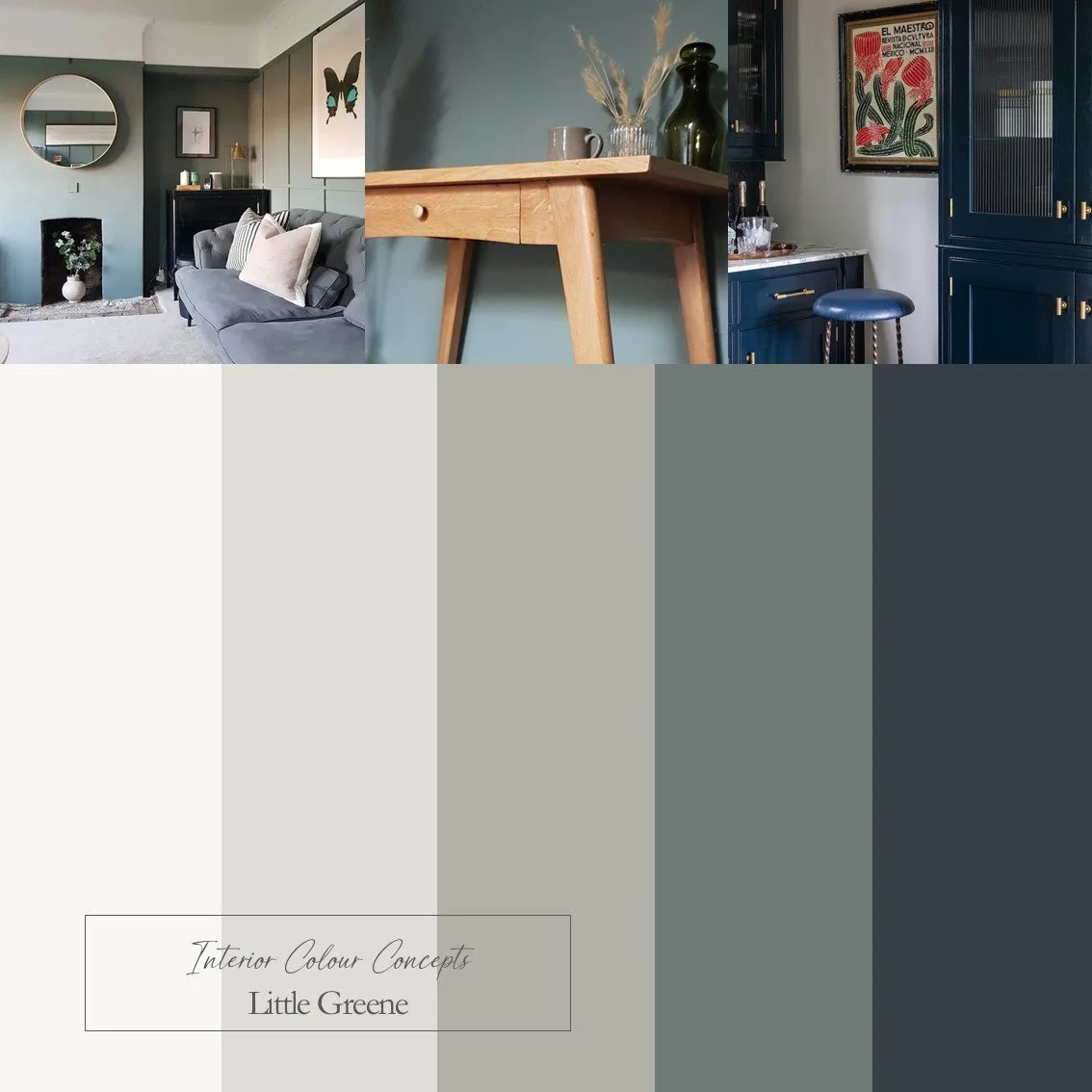 Image 2 of 4
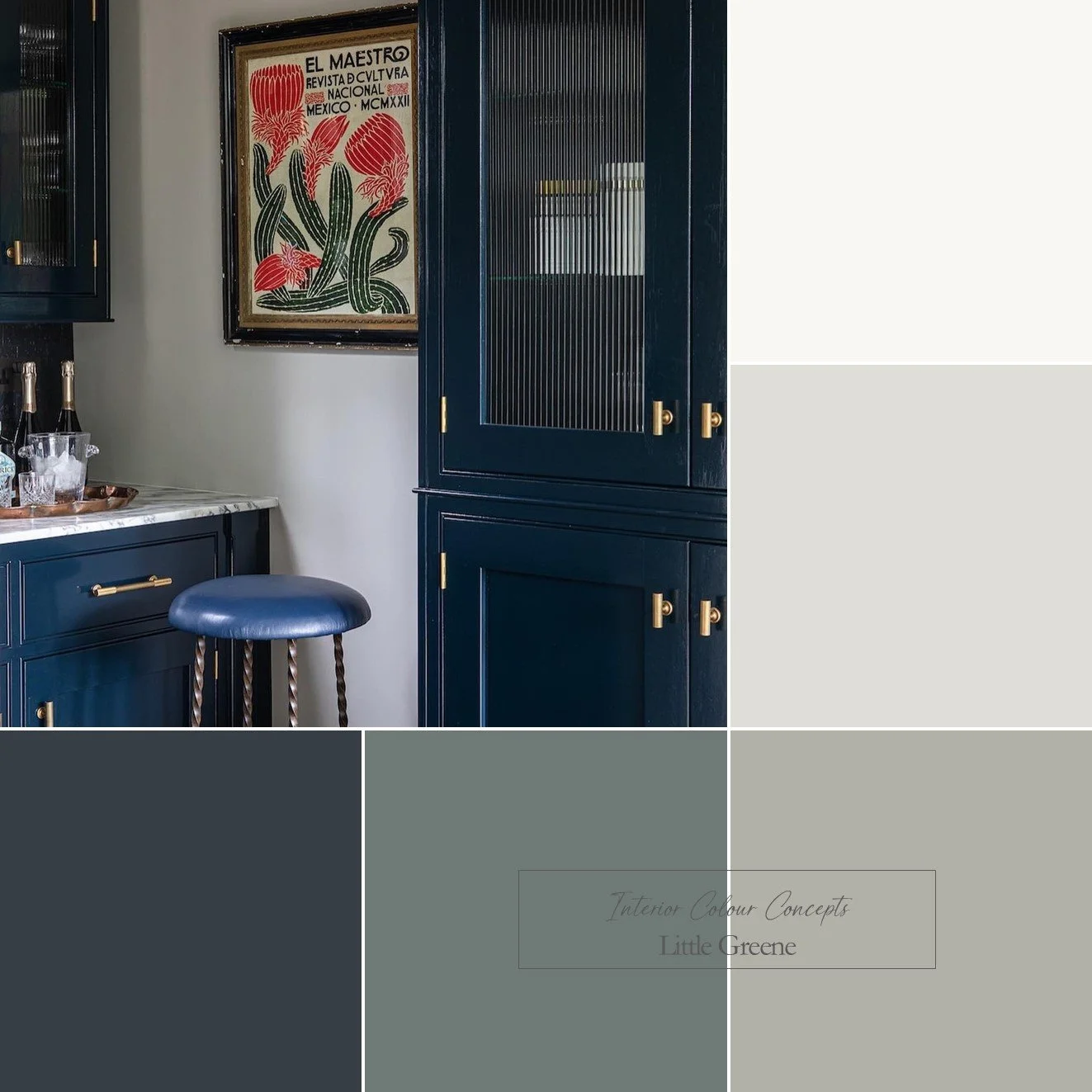 Image 3 of 4
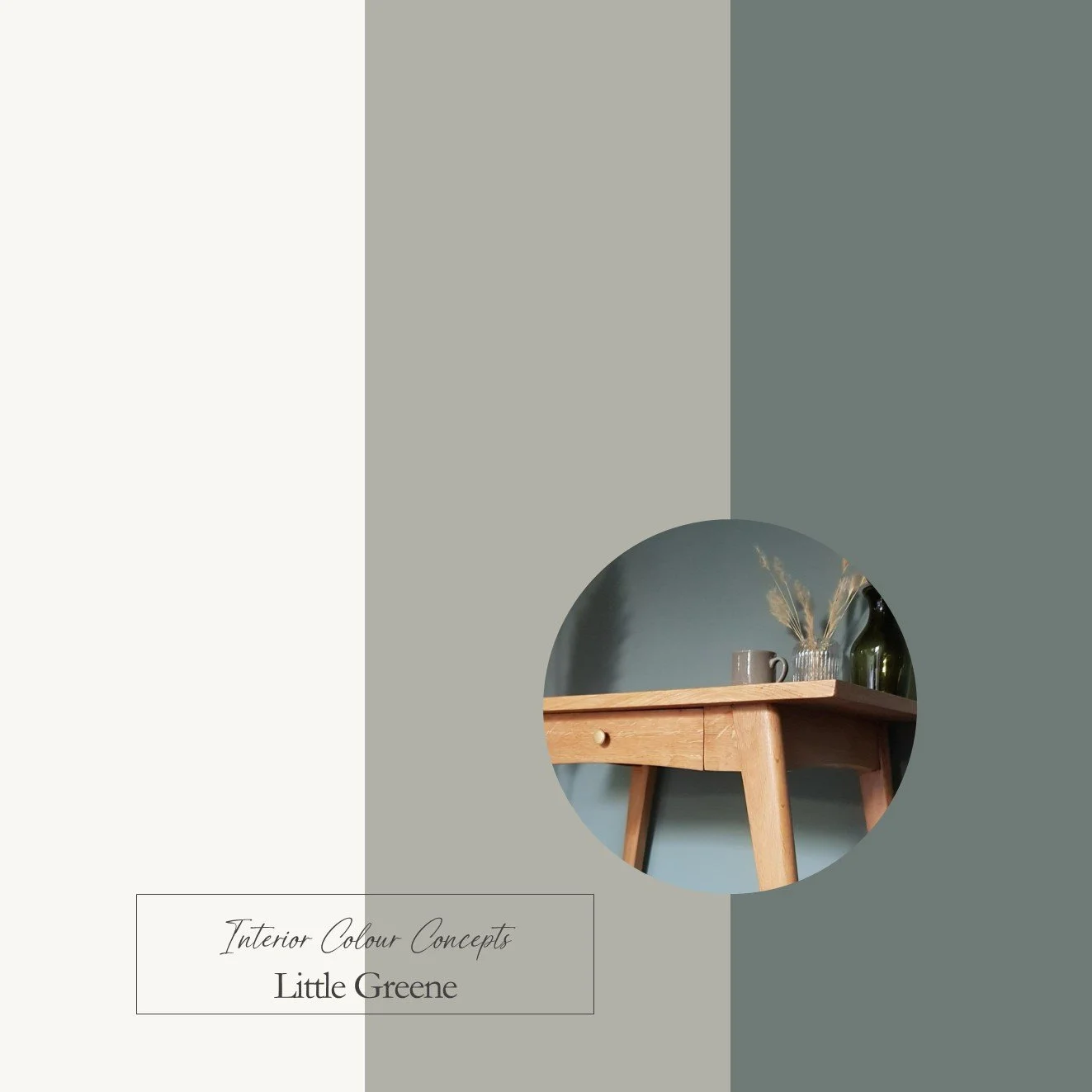 Image 4 of 4
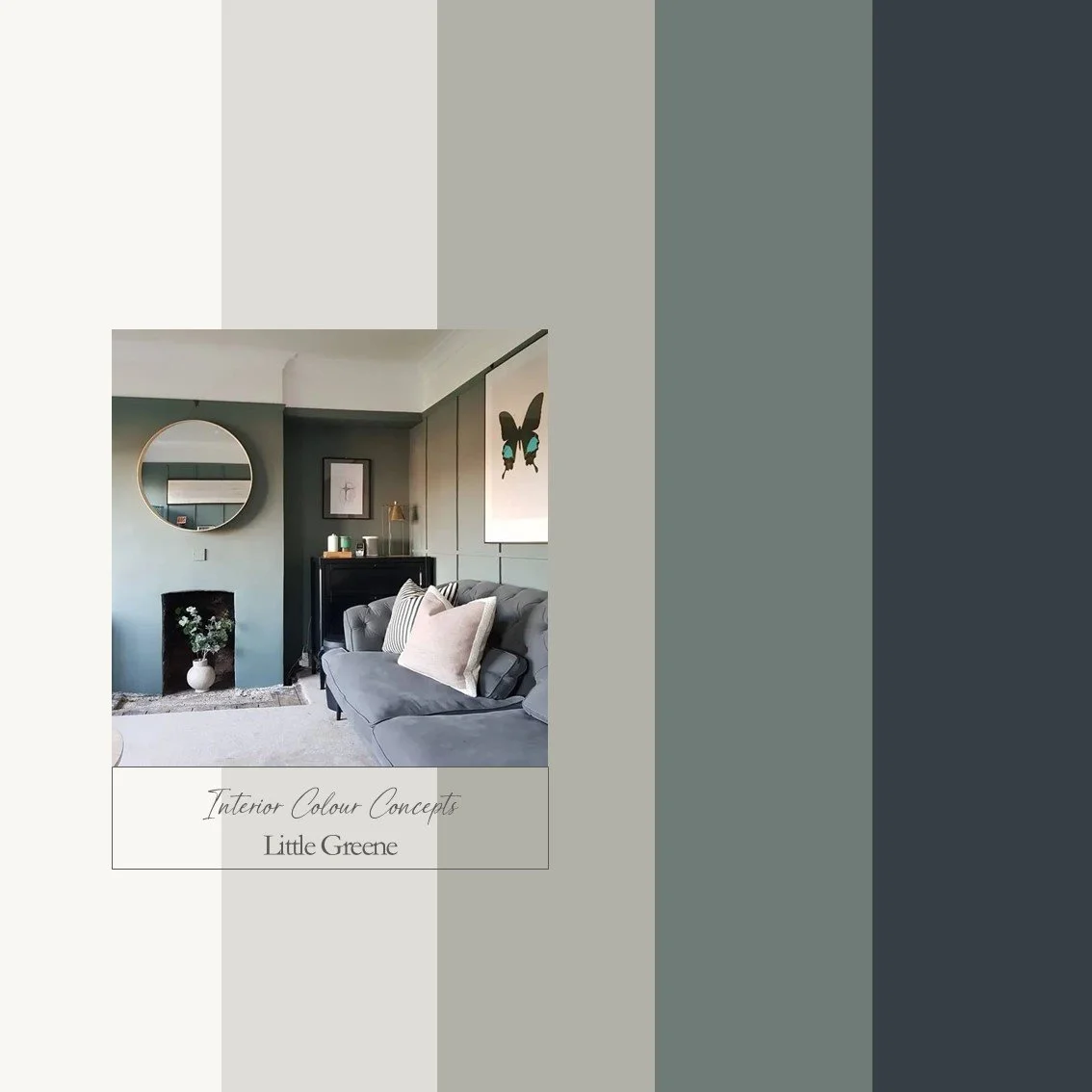
The central paint colour in this palette is a new shade from Little Greene. This understated colour is a gentle grey with green undertones. It can be used in many different settings and works particularly well with blues, as can be seen on this board. For a fresh look, pair it with the off-white or lighter grey, or with the darker green/blue or dark blue/black accent for a more dramatic feel. Images from @bo_et_compagnie and @littlegreene.
Our advice is - always check your colour choice, firstly on your Farrow & Ball or Little Greene colour card, and then with a sample pot. Colours can look different, depending on the aspect of your room and various lighting situations. Paint your sample pot onto a large piece of card, or on the back of a wallpaper cut off. Paint one coat, let it dry, then paint another - you will then have a true representation of the colour. Move your paper paint sample around the room, tack it to different walls, look at the colour in different lighting conditions and at different times of the day.
We also kindly ask you not to share any details of the colours on Social Media - we are a small company and would like to keep our Colour Boards within our domain - whilst sharing them with you!